Jordan Lejuwaan • • 3 min read
Microexpressions: Almost Undetectable Facial Language
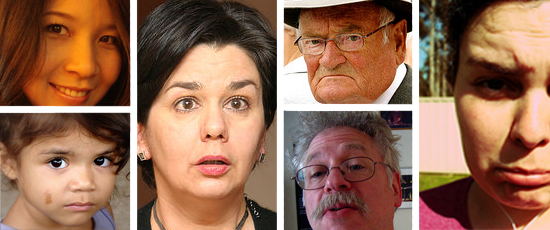
Micro Expressions are split-second muscle changes in the face that indicate that a person is either conscious or unconsciously supressing their true emotions.
These changes are constantly occurring on people’s faces, but can last for as little as 1/25th of a second according to Dr. Paul Ekman, the modern expert of micro expressions.
Thus most of the time you are only picking up on these expressions unconsciously, which may give you what feels to be intuitive insight into what a person really feels.
For example, if someone sneers for a split second before smiling to answer a question and you detect the change either conscious OR unconsciously, you will not trust the smile as much as if the sneer had no occurred.
Another example is when you meet someone for the first time but for some reason, you don’t like them or trust them even though they haven’t given you any reason to feel that way. You most likely picked up on a micro expression or two that your brain automatically translated to a feeling of dislike based on our evolutionary ability to interpret facial expressions.
Advantages of recognizing micro expressions:
– better understand the people you interact with– help protect yourself from harm, embarrassment and deception– become more convincing and manipulative by controlling your own use of micro expressions– detect when people are lying– become much better at sales Dr. Eckman traveled the world and observed thousands of people in order to determine that micro expressions are in fact universal, and not culturally determined. In other words if you learn to read micro expressions, they will mean the same thing coming from a Englishman as from an American. We, as humans, unconsciously detect and express them universally because we have all evolved that way. However, very few humans have the ability to consciously read micro expressions without any formal training. Eckman reported that only 50 out of the 20,000 people he tested were able to pick up on and interpret micro expressions. For the rest of us, Eckman has a $69 program on his website that trains users (including government agents, educational and medical professionals and salesmen) to harness the power of micro expression detection. There is also an online version for $20.Here is a little quiz that you can use to determine your innate ability to recognize micro expressions: QuizFun Fact:American psychologist John Gottman went around filming couples and would study the tapes in slow motion. This allowed him to master that art of micro expression detection so that he could determine if a relationship would last or not simply based on observing the couple’s micro-movements when interacting.
Eckman also came up with the Facial Action Coding System (FACS), which he uses to categorize and define every possible human facial expression. Through research with a New Guinea tribe with a society advanced only to the level of the Stone Age, Eckman was also able to identify the 7 basic human emotions and the facial expressions that went along with them. They are:1. Anger – lowered eyebrows, tense lips and eye lids and wrinkled forehead2. Disgust – raising of upper lip, narrowed eyes, wrinkled nose and narrowed eye brows
3. Fear – eyes and mouth open rather widely, eyebrows raised and nostrils flared
4. Happiness – raising corner of lips and cheeks, narrowing eyes to produce “crow’s feet” on the outside of each eye5. Sadness – narrowed eyes, eyebrows together, down-pointed mouth, and a pulling up of the chin6. Surprise – dropped jaw, relaxed lips and mouth, widened eyes and slightly raised eyelids and eyebrows7. Contempt
– single raised corner of the mouth, slight tightening of the eyelids (sneer)
Eckman has recently been helping develop machines that could be used at high-security places like airports and embassies that would use facial scanning to determine if people shows signs of deception or mal-intent.
While these machines could not be 100% accurate, especially since many emotions are so similar to each other, they could aid officers in narrowing down who could potentially pose a threat by picking up on fearful, anxious, angry or nervous micro expression.
Do you think we should have these machines? Comment below to share your thoughts!